

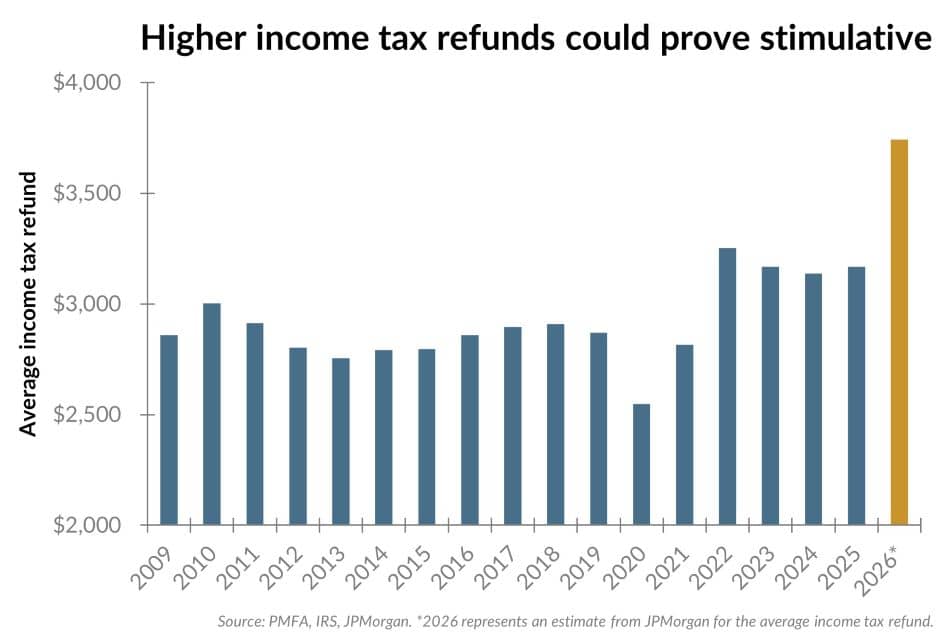
As we head into the 2026 tax filing season, many taxpayers may see considerably larger refunds, thanks to retroactive tax law changes included in the One, Big, Beautiful Bill (OBBB). Since withholding tables weren’t updated in 2025 to reflect the changes in the law, many individuals likely paid in more than necessary under the new rules — setting the stage for refunds that could be nearly 30% higher than their recent average. Expanded deductions for tips, overtime, auto loan interest, and a higher SALT cap are among the key drivers influencing the increase.
For many households, this unexpected lump sum cash flow could support near term spending, particularly for those who view tax refunds as flexible or discretionary income. On a broader level, the OBBB is expected to add to economic momentum in early 2026, not only through personal tax changes but also through corporate incentives that encourage business investment and provide more flexibility for capital spending.
However, the bill’s overall economic boost may be tempered by offsetting factors. For example, rising tariff revenues associated with shifting trade policies could counteract part of the stimulus. The Supreme Court’s decision on the constitutionality of President Trump’s approach looms large on that front, although most expect the administration to pivot to other legal arguments should the court not find in favor of their current approach.
The bottom line: Larger refunds combined with increased business incentives create the potential for an economic lift in early 2026. While this could provide a modest tailwind for risk assets, uncertainty and various sources of volatility remain. Against this backdrop, maintaining a balanced, long term, diversified investment strategy continues to be both prudent and appropriate.
Past performance does not guarantee future results. All investments include risk and have the potential for loss as well as gain.
Data sources for peer group comparisons, returns, and standard statistical data are provided by the sources referenced and are based on data obtained from recognized statistical services or other sources believed to be reliable. However, some or all of the information has not been verified prior to the analysis, and we do not make any representations as to its accuracy or completeness. Any analysis nonfactual in nature constitutes only current opinions, which are subject to change. Benchmarks or indices are included for information purposes only to reflect the current market environment; no index is a directly tradable investment. There may be instances when consultant opinions regarding any fundamental or quantitative analysis may not agree.
Plante Moran Financial Advisors (PMFA) publishes this update to convey general information about market conditions and not for the purpose of providing investment advice. Investment in any of the companies or sectors mentioned herein may not be appropriate for you. You should consult a representative from PMFA for investment advice regarding your own situation.


